Stordahl's next question
More than sixty years ago a blind man refused to accept that something was impossible. The question he asked still carries Ridderrennet today. Now it has a new mountain to test itself against.
Good answers expire. Good questions do not.
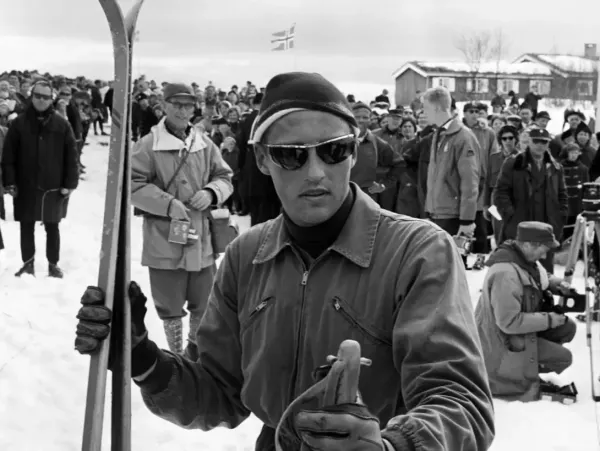
Beitostølen, Easter 1964. King Olav is waiting in the ski tracks, surrounded by close to a hundred soldiers on guiding duty and a band of blind and partially sighted skiers whom respectable opinion felt should stay quietly indoors. The starting gun goes off, and sets loose a royal commotion of skiers, guides and well-meant shouting in every direction. Both the King and the race make it to the finish. Norway has itself a new popular movement.
The man behind it all was Erling Stordahl. Blind from the age of thirteen, a national accordion champion as a teenager, and unable, his whole life, to hear the word 'impossible' without starting to smile. His idea fitted into a single sentence. Why shouldn't the blind ski?
Note the form. He did not ask for permission. He asked why not, and left the burden of proof with the rest of the world. Limits are usually assumptions in disguise, and assumptions cope badly with being asked for their papers.
The method that never went out of fashion
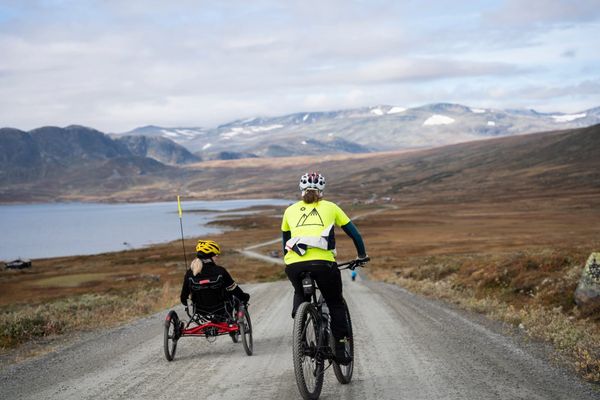
Today the race has grown into Children's Ridderweek, Riddercamp and Ridderuka, the Knights' Week, the world's largest annual winter sports week for the visually and mobility impaired. The association behind it has become something more than an organiser. A movement against loneliness and exclusion. The method is the same as in 1964, and it is suspiciously simple. See people. Where they stand, as they are.
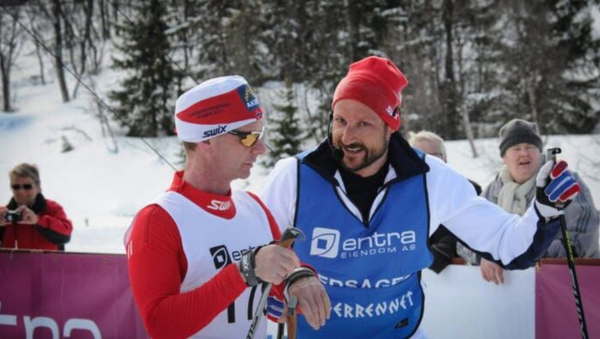
We have tried the alternatives. Ceremonial speeches, strategy documents, slides with the word 'inclusion' in three colours. The effect has been modest. But put a person in a ski track with a guide alongside, and something happens that no PowerPoint has ever managed. Queen Sonja received her own instructions while serving as a guide. 'Blow your nose on your mitten!' That is how people talk when they are properly on the same team.
It is from this vantage point, and only this one, that I now intend to say something about artificial intelligence.
The tool Stordahl never had
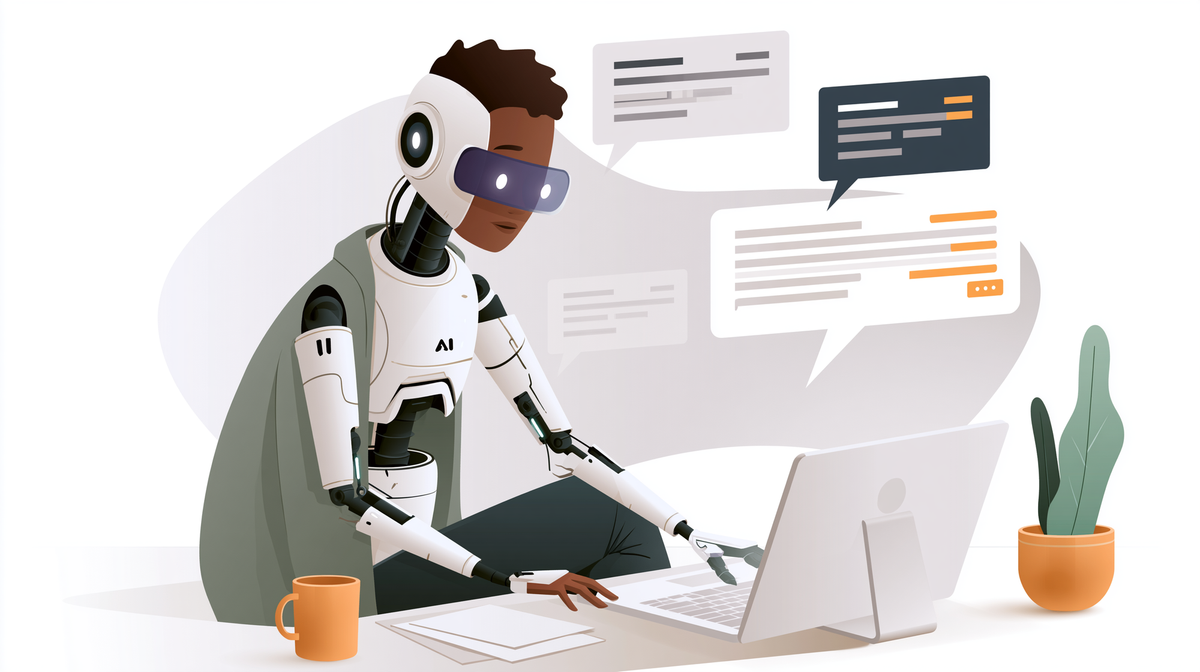
Stordahl had skis, poles and soldiers from the Armed Forces. Solid equipment, but heavy, and dependent on many hands. The new tool weighs nothing and is already in your pocket. The conversational assistants half of Norway argues with over lunch. ChatGPT, Gemini, Claude, and whatever they happen to be called this week.
If you can see, such an assistant is a handy shortcut. For someone who is blind, it is something else entirely. The chance to read your own post the moment it lands on the mat. For someone with dyslexia, the chance to finally say what you mean without tripping over the letters. For someone who lost their words after a stroke, a conversation partner with unlimited patience.
Skis opened up a mountainside. This can open a letterbox, a bus route, an application deadline. It sounds less grand. It is not. Everyday life is where life actually lives.
Not a miracle. A pair of skis.
One thing I can promise is not to promise too much. Ridderrennet has never dealt in easy victories. We know precisely what it takes to get down a mountainside you cannot see. A little assistance, a great deal of will, and a generous helping of gallows humour.
The same sobriety applies here. Artificial intelligence is not a cure. It is a tool, roughly as promising and as unreliable as a pair of skis under a beginner. It can carry you safely down the slope. It can also deposit you neatly in the hedge. Both feature in this series.
Four more pieces follow. On the philosophy from Beitostølen that turns out to be the best instruction manual technology could ask for. On what the invisible guide in your pocket actually gets done in a blind person's day. On why disabled people are not passengers in technological development but sit behind the wheel. And finally on the question that stings. When does the machine bring us together, and when does it pull us apart?
Stordahl stood before a mountain and refused to turn back. Now we stand before a new one. The least we can do is ask his question one more time.
Why not?
Next in the series. 'Adapt the tool, not the person'. A fifty-year-old sentence from Beitostølen turns out to fit artificial intelligence like a freshly waxed ski.