Adapt the tool, not the person
One sentence from Beitostølen turned the whole idea of mastery on its head. Fifty years on, it turns out to be the best user manual we have for artificial intelligence.

Every tool asks you a question. Most ask what you can do for them. The best ask what they can do for you. The difference decides who gets to take part.
For fifty years the computer has behaved like a strict doorman. You are let in if you know the code, press things in the right order, and never ask a question in the wrong menu. Forgot where the function was hiding? Your problem. Typed it wrongly? Try again. The entire history of IT is one long message to the user. Adapt yourself to the system.
For disabled people, that message is old news. For generations it was the keynote from society at large. Become as much like the others as you can, and perhaps you will be allowed to join in. Sport said it. School said it. Working life still says it, rather more often than it cares to admit.
At Beitostølen stood a man saying the exact opposite.
The sentence that moved the fault
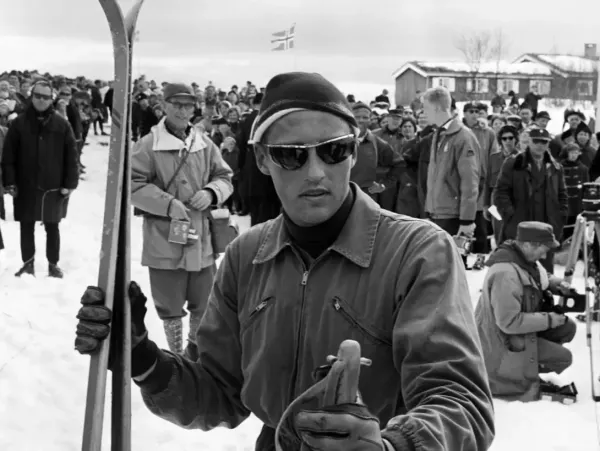
Out of Ridderrennet grew Beitostølen Health Sports Center, and with it an entire academic field. Adapted physical activity. At the heart of it stood Inge Morisbak with a thought so simple it is easy to underestimate. We are not going to fix the person to fit the sport. We are going to shape the sport to fit the person.
With one sentence he moved the fault. It had never been in the person. It was in the activity, the equipment, the arrangements. If your legs will not carry you, we put you in a sit-ski. If you cannot see the track, a voice goes along beside you. These days the design world calls this universal design and holds conferences about it. At Beitostølen they called it common sense and went skiing.
The machine that finally learned some manners
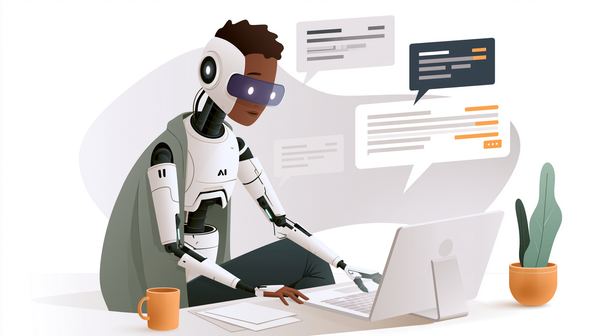
Then along comes artificial intelligence, and for the first time in computing history the remarkable happens. It is the machine that adapts to you.
A conversational assistant demands no code, no menu, no manual. You approach it in your own language, at your own pace, in your own untidy way. If you cannot see the screen, you speak and listen. If the letters quarrel, it reads straight through the spelling mistakes like a tactful friend, without mentioning them. If you need the explanation a fourth time, you get it a fourth time. Without the sigh. Without the glance at the clock. And if it still will not stick, you can say, 'Explain it as if I were five.' It will, without treating you like a five-year-old.
It is Morisbak's sentence again. This time written in code.
This is not about gadgets
It may sound like a technical detail. It is a condition of life. Many of our people have spent a lifetime adapting. Asking for help, waiting for help, explaining themselves and defending their own needs at every single crossroads. When a tool meets you where you stand, for the first time, it touches something far larger than the screen it lives in.
You no longer apologise for the way you function. You no longer wait until someone has a moment.
You are the main character in your own life, not an extra in other people's goodwill. There is an old word for this, and it is not 'user experience'. It is dignity.
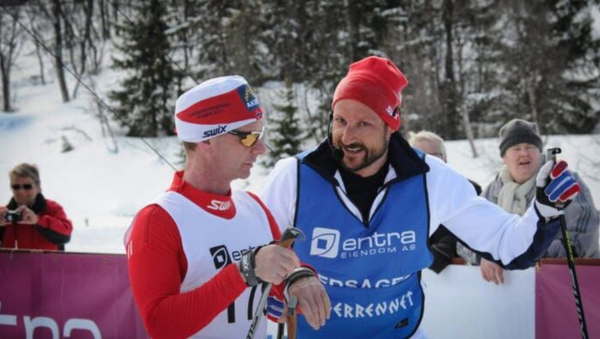
When Alan Groom, a participant from the UK, wrote about this year's Ridderuka, the Knights' Week, he put it plainly. 'For one week in Norway, I stopped feeling like a problem to be managed.' Good technology gives a related feeling. Not of being repaired, but of a world finally furnished so that you get through the door.
The warning in the same sentence
But Morisbak's sentence is not content to pat technology on the shoulder. It points at those of us who build it and buy it. If we make AI solutions with one language, one tempo, and one idea of who the user is, we are back at the old game. Fixing people, only with shinier tools and prettier fonts.
The test is simple, and it deserves a place on the wall of every public procurement meeting. Does the solution bend to those who need it most, or only to the average? And are the people who know the difference in their bones at the table from the first sketch, or are they invited in once the cake is already baked?
Morisbak understood this more than fifty years ago. The insight, in other words, is in place. It is the courage that has a short shelf life.
Adapt the tool, not the person. The recipe is no harder than that.
Next in the series. 'The invisible guide'. What the new companion actually does in a blind person's day. And where the line is drawn.